Case study · product
Bibit Landing Page Redesign
A landing page redesign that didn't ship, and taught me to decide before I design.
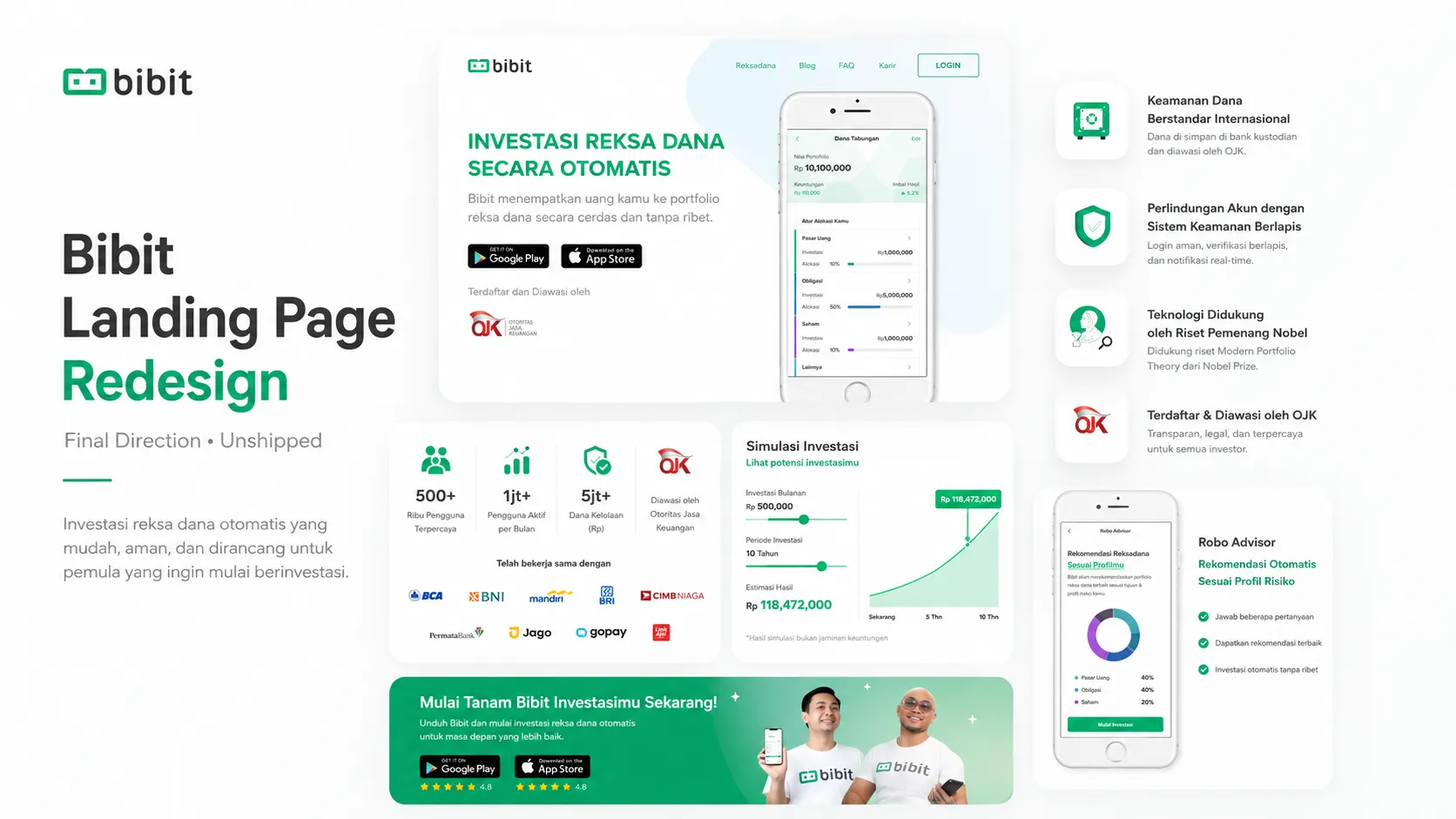
In 2021, Bibit’s design team ran an internal exploration to rebuild the homepage and landing page. We split into small groups, each working a different direction. I was on Venus Team. This was early in my career, and I was still learning how product, marketing, engineering, and craft pull against each other inside a single design decision. We built a direction I stood behind, and it didn’t ship. I’m writing it up because the reason it lost taught me more than the work itself.
The problem
The old landing page had two gaps. The visual direction looked dated, and the information architecture didn’t explain mutual fund investing to people who had never invested before. Bibit onboards first-time investors, so the page had to do more than look clean. It had to build trust, explain the product, and answer the hesitation that stops someone before they download the app.
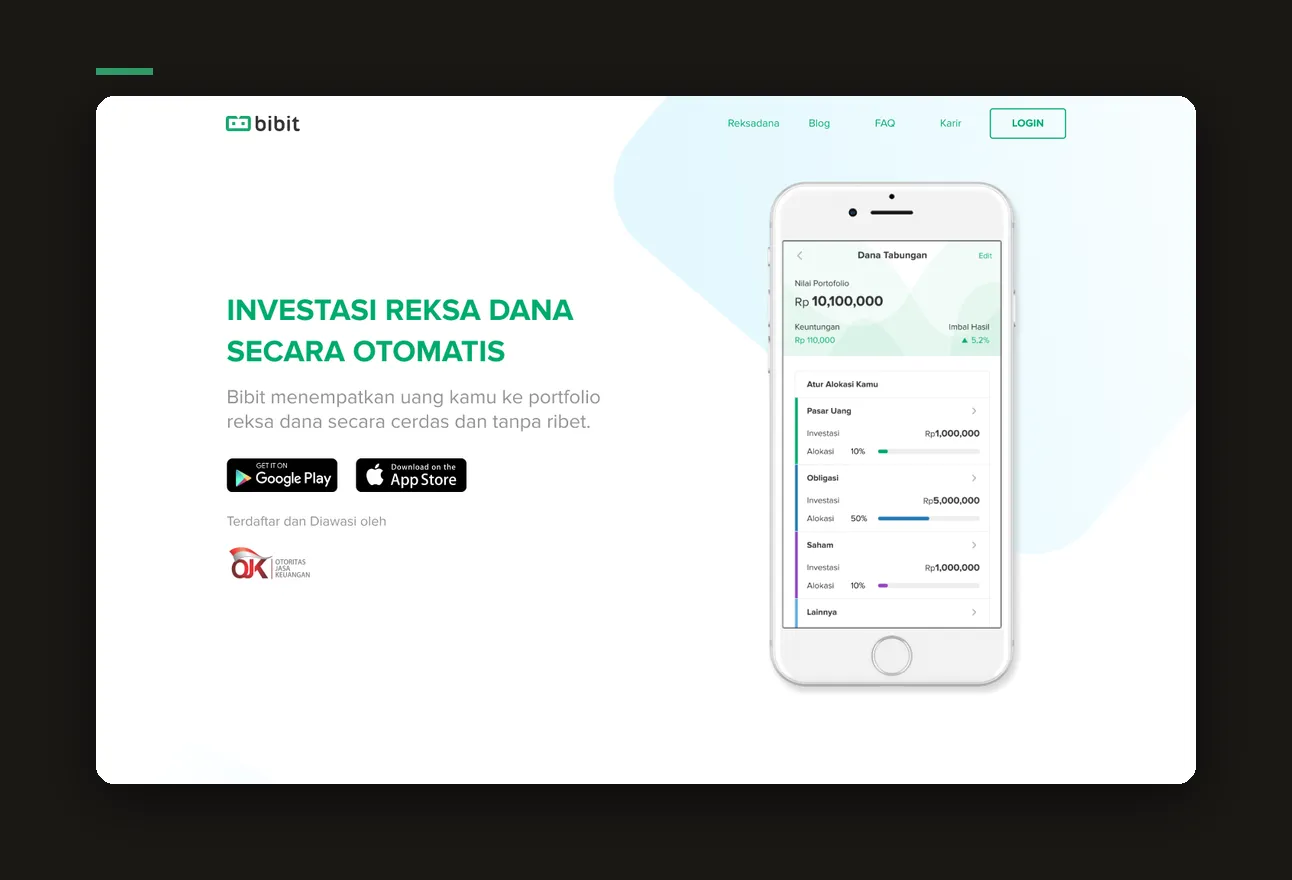
The starting point. Clean enough, but it leaves a first-time investor’s questions unanswered.
We opened with a co-creation session. Everyone brought observations and ideas, and we agreed on the sections we thought the page needed: a stronger hero, trust signals, product explanation, value proposition, features, conversion points. At the time it felt like we were defining the right structure. In hindsight we were building from our own assumptions about what a first-time investor needed to see.
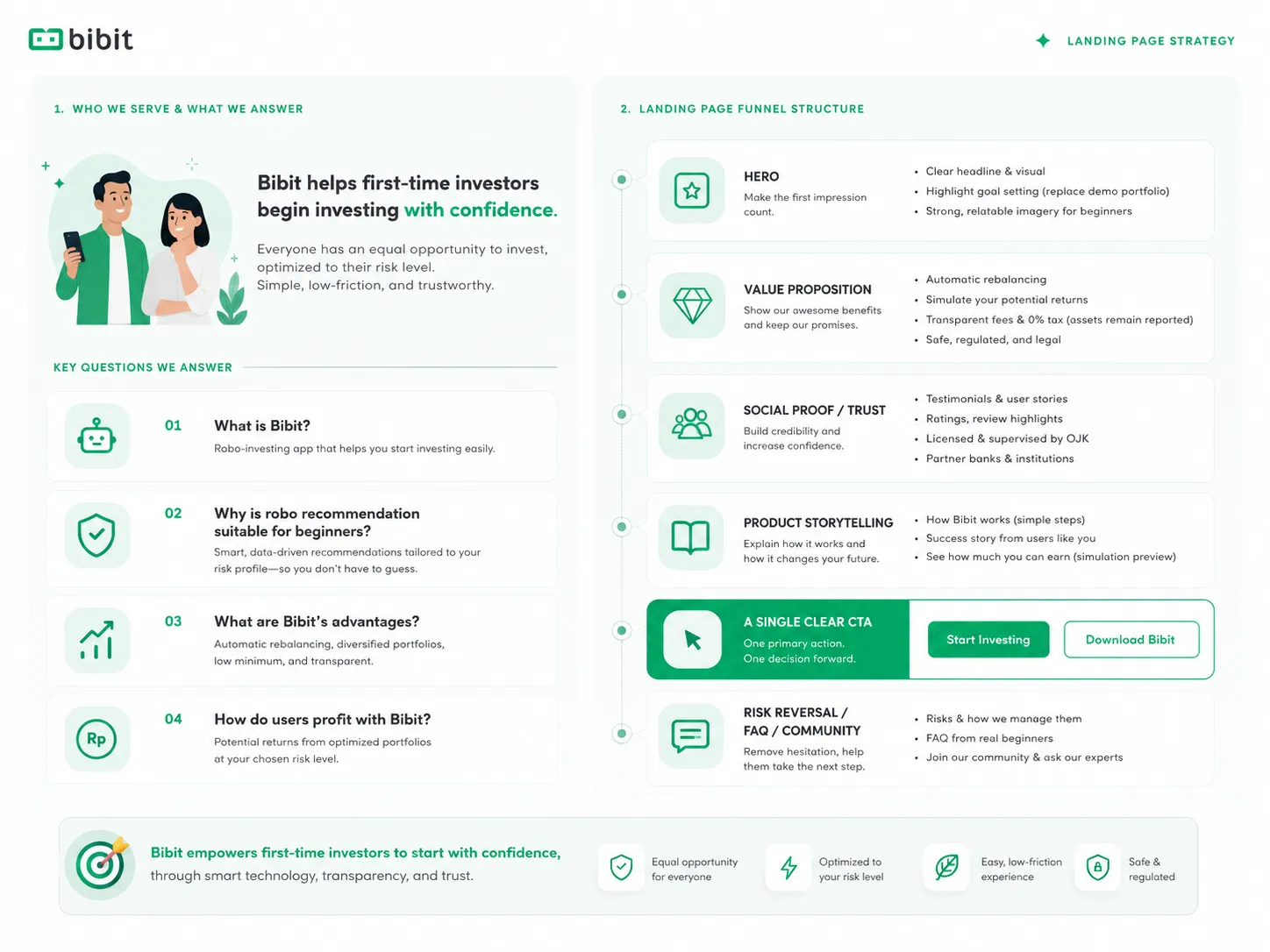
We mapped the funnel from the inside out, before we had tested which of those sections a user actually needed.
The exploration
We explored several directions instead of committing early. Each one answered the same question from a different angle: how should Bibit introduce itself to a first-time investor? Some leaned on visual freshness, some on education and trust, some stripped the story down, some gave product explanation more room.
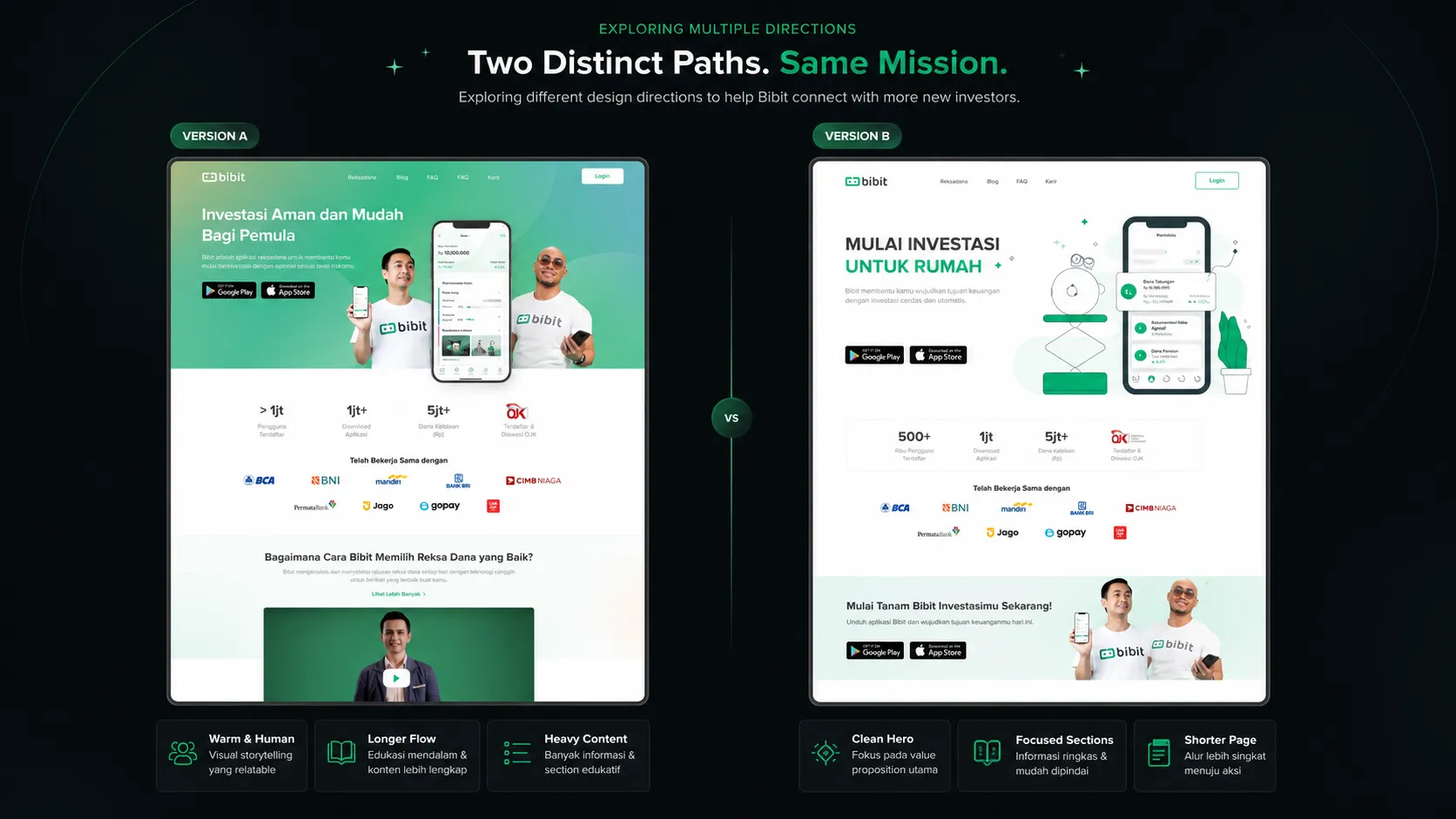
Two of the directions we compared. Different stories, different layouts, same untested question underneath.
Comparing them exposed a weak point in our process. We produced alternatives quickly, but we had not validated which user hesitation mattered most, which message belonged first, or what the business needed the page to prioritize. Each round looked better than the last, and we still had no real basis for choosing between them.
The validation
To cut down our assumptions, we took the work to stakeholders, PMs, marketing, and engineering. The feedback changed the conversation.
Some of it questioned whether sections we had treated as essential were useful at all. Some flagged unclear content around safety, fees, tax, and the investment simulation: is this legal, what does the commission actually cost, is tax really zero. Engineering showed us which interactions would cost more than they returned, and which feature explanations, like the robo-advisor and auto-rebalance, still confused people who read them.
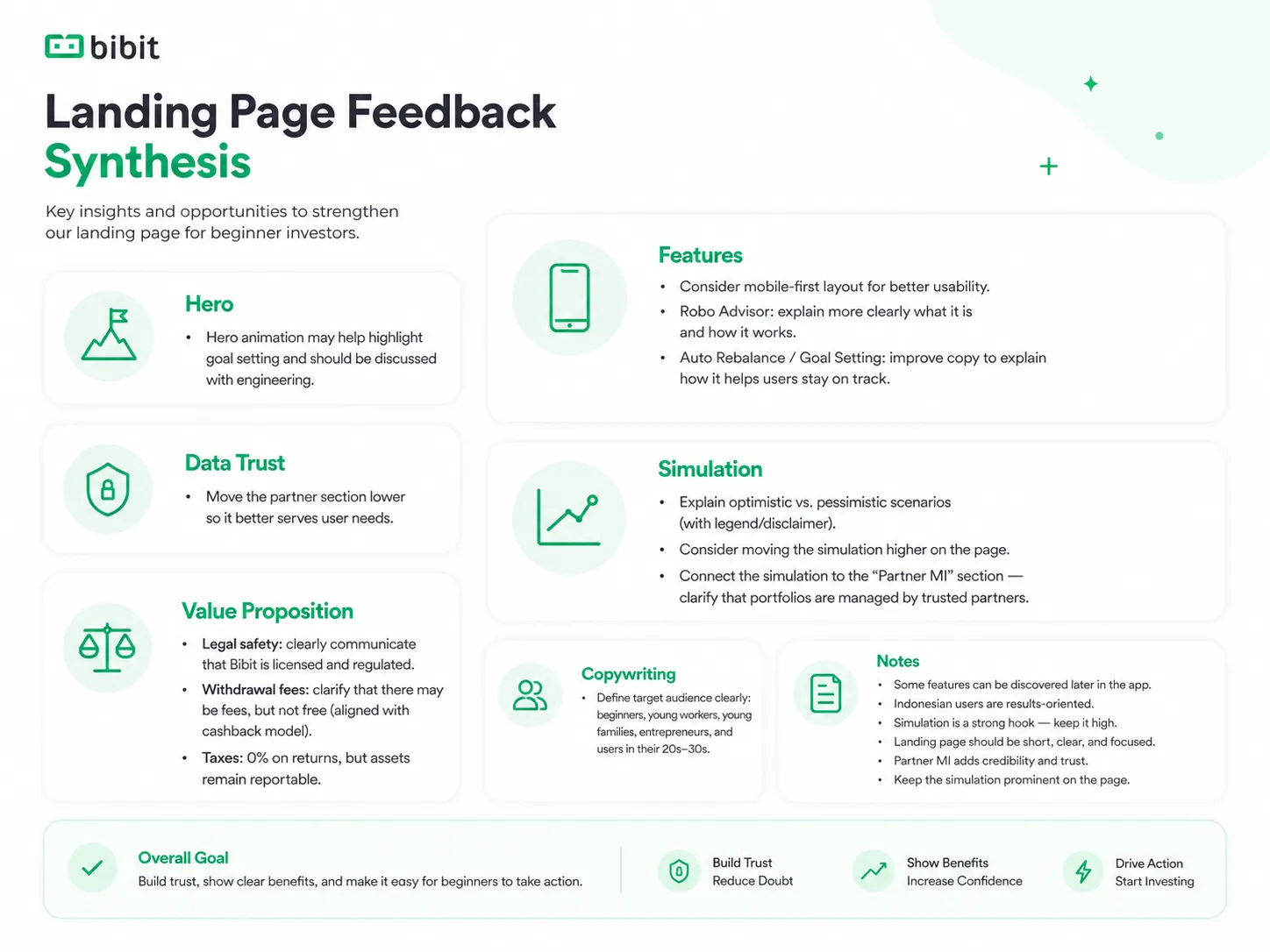
The feedback, grouped by section. Most of it was about content and trust, not visuals.
That feedback reframed the project for me. A landing page has to carry business goals, product explanation, content, trust signals, and technical limits at the same time. A cleaner interface could not hold all of that on its own.
The revision
We revised instead of restarting. We tightened the structure, reworked the flow, and put more weight on trust, product value, the investment simulation, reassurance, and clearer paths to action. It was the strongest version we had made.
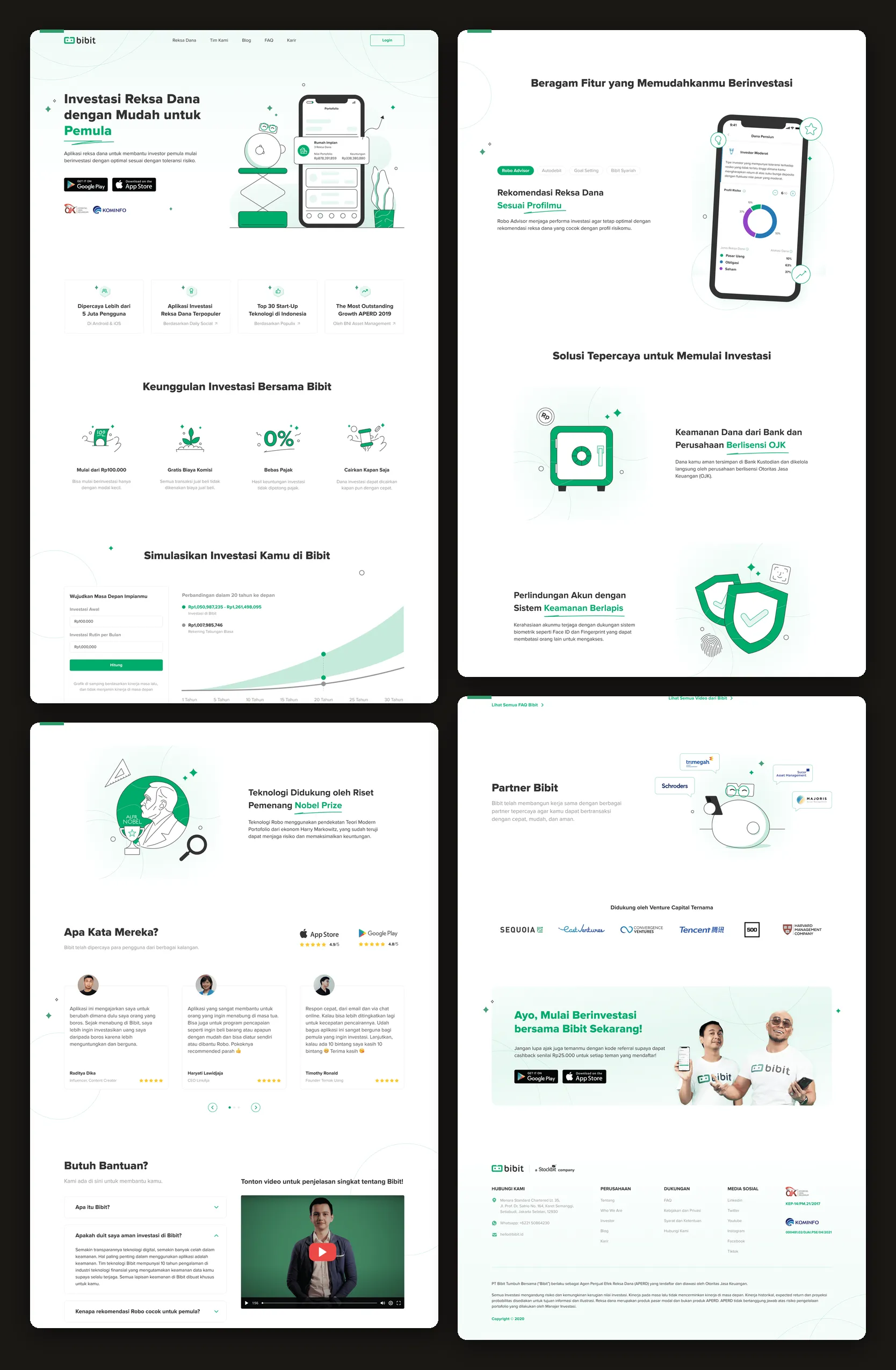
The direction we landed on, top to bottom: lead with the offer, build trust through who holds your money and what protects the account, then answer the first-timer’s questions before the final call to action. Stronger structure and trust signals, but the alignment question underneath it stayed open.
In the final decision, another team’s direction became the new Bibit landing page. Ours did not.
Why it didn’t ship
Losing stung. We had explored, argued, revised, and presented something we believed in, and it still did not ship. It took me a while to separate the disappointment from the actual lesson.
Staying unlaunched did not make the project a failure. It would only have been a failure if I had walked away without understanding why it lost. The real question was never whether the page looked good. It was alignment: what job the page was doing, and whether product, marketing, and engineering agreed on that job before anyone opened Figma. We had done the craft without securing that agreement first.
What I would do differently
I would slow down before the visual exploration. First I would pin the page’s primary job. Acquisition, education, trust, app installs, brand refresh: each one builds a different page. Then I would pull marketing, product, and engineering in at the start, not as reviewers at the end. For a landing page they are part of the strategy, not a checkpoint.
I would set the evaluation criteria before comparing versions, so the question stops being which one looks better and becomes:
- Does it answer the user’s biggest hesitation?
- Does the story move from awareness to trust to action?
- Does it serve the business goal?
- Can the team build and maintain it?
- Is every section earning its place?
Those questions would have settled the direction earlier, before we got attached to execution.
What I took from it
I was chasing craft then. I cared about structure and making the page feel better, and that mattered, but it was not the gap. The gap was knowing which questions to ask before designing, which assumptions to test, and who to bring into the room early.
It also changed how I think about a portfolio. Shipped, polished screens are only part of the record. The rejected directions and the calls that went against me shaped my judgment as much as the wins did. This redesign never became Bibit’s landing page, and it remains one of the projects I learned the most from.